

Alcohol addiction is a complex health condition that can affect a person’s physical health, mental well-being, relationships, work, and everyday responsibilities. What begins as occasional or social drinking can become problematic when alcohol consumption becomes difficult to control or continues despite harmful consequences.
Recognizing the signs of alcohol dependence and seeking professional support can be an important step toward recovery. At Nishan Rehab Addiction Treatment Center, Islamabad, Pakistan, alcohol addiction care focuses on individualized assessment, compassionate support, and evidence-based approaches that address the physical, psychological, and behavioral aspects of addiction.
What Is Alcohol Addiction?
Alcohol addiction, clinically known as Alcohol Use Disorder (AUD), involves a persistent pattern of alcohol use that causes significant problems or distress. A person may find it difficult to reduce their drinking, experience strong cravings, or continue consuming alcohol despite problems affecting their health, relationships, employment, or daily life.
Repeated alcohol consumption can also lead to tolerance and physical dependence. When dependence develops, suddenly stopping alcohol may cause withdrawal symptoms that require medical attention.
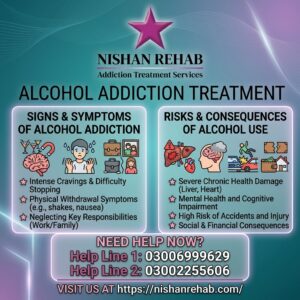
Signs and Symptoms of Alcohol Addiction
Alcohol addiction can affect people differently. However, several warning signs may indicate problematic alcohol use.
These may include:
- Drinking more or for longer than intended
- Strong cravings for alcohol
- Repeated unsuccessful attempts to stop drinking
- Increasing tolerance
- Experiencing withdrawal symptoms
- Neglecting family, work, or educational responsibilities
- Continuing to drink despite health or relationship problems
- Spending considerable time obtaining or recovering from alcohol
- Losing interest in normal activities
- Experiencing frequent mood changes
A professional assessment can help determine whether an individual’s drinking pattern requires treatment.
Causes and Risk Factors for Alcohol Addiction
There is no single cause of alcohol addiction. It can develop through a combination of biological, psychological, and environmental factors.
Family History
Genetic and family factors may influence vulnerability to alcohol-related problems.
Mental Health Challenges
Depression, anxiety, trauma, and chronic stress may increase the risk of problematic drinking. Some individuals may use alcohol as an unhealthy way of coping with difficult emotions.
Social Environment
Peer pressure, family drinking patterns, and social settings where alcohol use is common can influence drinking behavior.
Stressful Life Experiences
Relationship difficulties, financial pressure, grief, employment problems, and other significant life challenges may contribute to unhealthy alcohol use.
Understanding these factors can help professionals create an individualized treatment approach.
Effects of Alcohol Addiction on Health
Long-term or heavy alcohol consumption can affect several areas of physical and mental health.
Potential physical consequences may include:
- Liver problems
- Cardiovascular complications
- Digestive difficulties
- Weakened immune function
- Nutritional deficiencies
- Sleep disturbances
Alcohol addiction can also affect mental and emotional well-being. Some individuals may experience anxiety, depression, irritability, memory difficulties, or problems with emotional regulation.
The effects vary depending on drinking patterns, duration of use, overall health, and other individual factors.
Alcohol Withdrawal and Detoxification
People who have developed physical dependence on alcohol may experience withdrawal after stopping or significantly reducing their alcohol intake.
Possible symptoms include:
- Tremors
- Sweating
- Anxiety
- Nausea
- Restlessness
- Irritability
- Sleep difficulties
- Increased heart rate
- Strong cravings
Severe alcohol withdrawal can sometimes become medically dangerous. Individuals with significant alcohol dependence should therefore seek professional medical advice before attempting to stop suddenly.
At Nishan Rehab Addiction Treatment Center, Islamabad, Pakistan, detoxification can be considered as part of a broader treatment plan when clinically appropriate.
Alcohol Addiction Treatment Programs
Effective addiction treatment addresses more than the physical effects of alcohol dependence. It also considers the psychological, behavioral, and social factors associated with problematic drinking.
Treatment may include:
Medical Detoxification
When appropriate, medically supervised detoxification can help manage withdrawal symptoms and provide monitoring during the early stage of recovery.
Individual Counseling
One-on-one counseling allows individuals to explore personal triggers, emotional difficulties, relationship concerns, and behaviors associated with alcohol use.
Cognitive Behavioral Therapy
Cognitive Behavioral Therapy (CBT) can help individuals recognize unhealthy thought patterns, manage triggers, and develop healthier coping strategies.
Group Therapy
Group therapy can provide peer encouragement and opportunities to share experiences with others facing similar recovery challenges.
Family Support Program
Family counseling and education can help loved ones understand addiction, improve communication, establish healthy boundaries, and provide appropriate support.
Relapse Prevention
Relapse prevention focuses on identifying triggers, recognizing warning signs, managing cravings, and developing practical strategies for maintaining recovery.
Alcohol Addiction and Mental Health
Alcohol addiction can occur alongside mental health conditions such as depression, anxiety, or trauma-related disorders. When substance use and mental health concerns occur together, the situation may be described as a Dual Diagnosis or co-occurring disorder.
Treating both concerns can be important because untreated psychological difficulties may complicate recovery. A comprehensive assessment can help determine whether additional mental health support is needed.
The Role of Family Support
Alcohol addiction can affect spouses, parents, children, siblings, and other loved ones. Families may experience emotional stress, damaged trust, communication problems, or financial difficulties.
Family involvement can provide valuable support when it is guided appropriately. Relatives can learn about addiction, develop healthier communication skills, recognize potential warning signs, and establish boundaries that protect both the individual and the family.
Relapse Prevention and Long-Term Recovery
Recovery continues after the initial treatment period. Developing a personalized relapse prevention plan can help individuals prepare for situations that may increase the risk of returning to alcohol use.
Long-term recovery strategies may include:
- Continued counseling
- Healthy daily routines
- Stress-management techniques
- Supportive relationships
- Avoiding high-risk environments
- Mental health follow-up
- Family involvement
- Regular recovery planning
A setback does not necessarily mean that recovery has failed. It may indicate that additional support or changes to the treatment approach are required.
FAQs About Alcohol Addiction
1. What is Alcohol Use Disorder?
Alcohol Use Disorder is a medical condition involving difficulty controlling alcohol consumption despite negative physical, psychological, social, or personal consequences.
2. What are the common signs of alcohol addiction?
Common signs include strong cravings, difficulty controlling drinking, increased tolerance, withdrawal symptoms, neglect of responsibilities, and continued drinking despite harmful consequences.
3. Can alcohol withdrawal be dangerous?
Yes. Severe alcohol withdrawal can cause serious medical complications. People with significant alcohol dependence should seek professional medical guidance before stopping alcohol abruptly.
4. Can alcohol addiction occur with depression or anxiety?
Yes. Alcohol addiction can occur alongside depression, anxiety, trauma-related conditions, and other mental health concerns. Professional assessment can help identify and address co-occurring conditions.
5. What treatment options are available for alcohol addiction?
Depending on individual needs, treatment may involve medically supervised detoxification, individual counseling, behavioral therapy, group therapy, family support, mental health care, and relapse prevention.
Conclusion
Alcohol addiction is a treatable health condition that can affect physical health, mental well-being, relationships, and everyday life. Early recognition and professional assessment can help individuals understand the severity of alcohol dependence and identify an appropriate treatment approach. Detoxification, counseling, behavioral therapy, family involvement, mental health support, and relapse prevention can all contribute to a comprehensive recovery plan. Nishan Rehab Addiction Treatment Center, Islamabad, Pakistan is committed to providing ethical, compassionate, and individualized alcohol addiction care that prioritizes patient safety, dignity, and long-term well-being.


